

Aristotle categorised speeches into three rough categories:
- Deliberative speeches – those designed to persuade an audience
- Judicial speeches – those where you are arguing against an opponent
- Epideictic speeches – those which are given at ceremonial events
Of course, nowadays, most speech will include an element of all three. However, there are still speeches which are very much epideictic. I recently listened to one.
It was the Vice Chancellor’s annual address at the University of Cambridge: known as the October Speech.

Any speechwriter will tell you that ceremonial speeches that repeat themselves yearly are often the most irritating to write – what more can you say after every gimmick has been used up and nothing particularly interesting has happened over the past twelve months?
I won’t go into the details of the rhetoric of the speech; however, I wanted to share some observations on the setting.
It is important to first of all explain a bit about the history of this ceremony and how the speeches fits in. Historically, this event was not made for a speech. It is an event for the election of college positions such as the proctors (the proctors carry chained books for these events). The speech was bolted on to the events in the past decade to allow the Vice Chancellor an opportunity to speak to the entire academic community. Already, this puts the speaker in an uncomfortable position. It is a new tradition being added to an old one. Does it carry the same gravitas? Can it be more light hearted?
The election of the proctors is a very formal event, the speech isn’t but they happen at the same sitting. The formality extended not only to the room, but also to the language, the dress, and even the dress of the audience. You might be amused to learn that many people in the audience were wearing their academic gowns, and I had missed the memo… So there I was in chinos and a duffle coat with my gown neatly tucked away at home. It wasn’t quite as bad as that scene in Bridget Jones’ Diary.
The hour-long event began with the election of the university proctors. There were ceremonial recitations in Latin as people dressed traditional attire paraded back and forth, in some cases carrying different types of weaponry (at times, it felt a bit like a cosplay event). At one point I saw a lady brandishing a halberd.
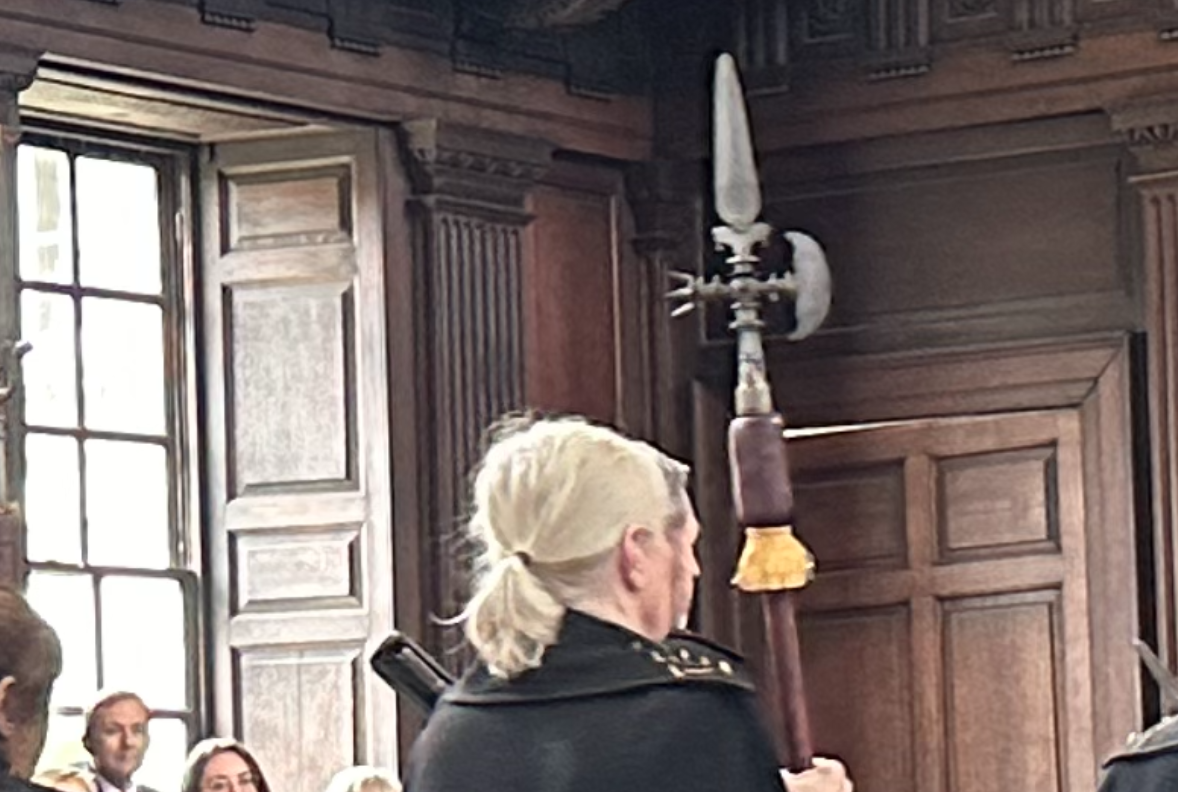
The room was freezing cold, and the ceremony just made it feel even colder. Eventually the Vice Chancellor stood up to give her speech. Unlike the rest of the ceremony which was in Latin, the speech was in English.
It is hard to take a speech seriously when the speaker is clearly uncomfortable – and who wouldn’t be uncomfortable giving a speech in 2024 in the midsts of historic formality?
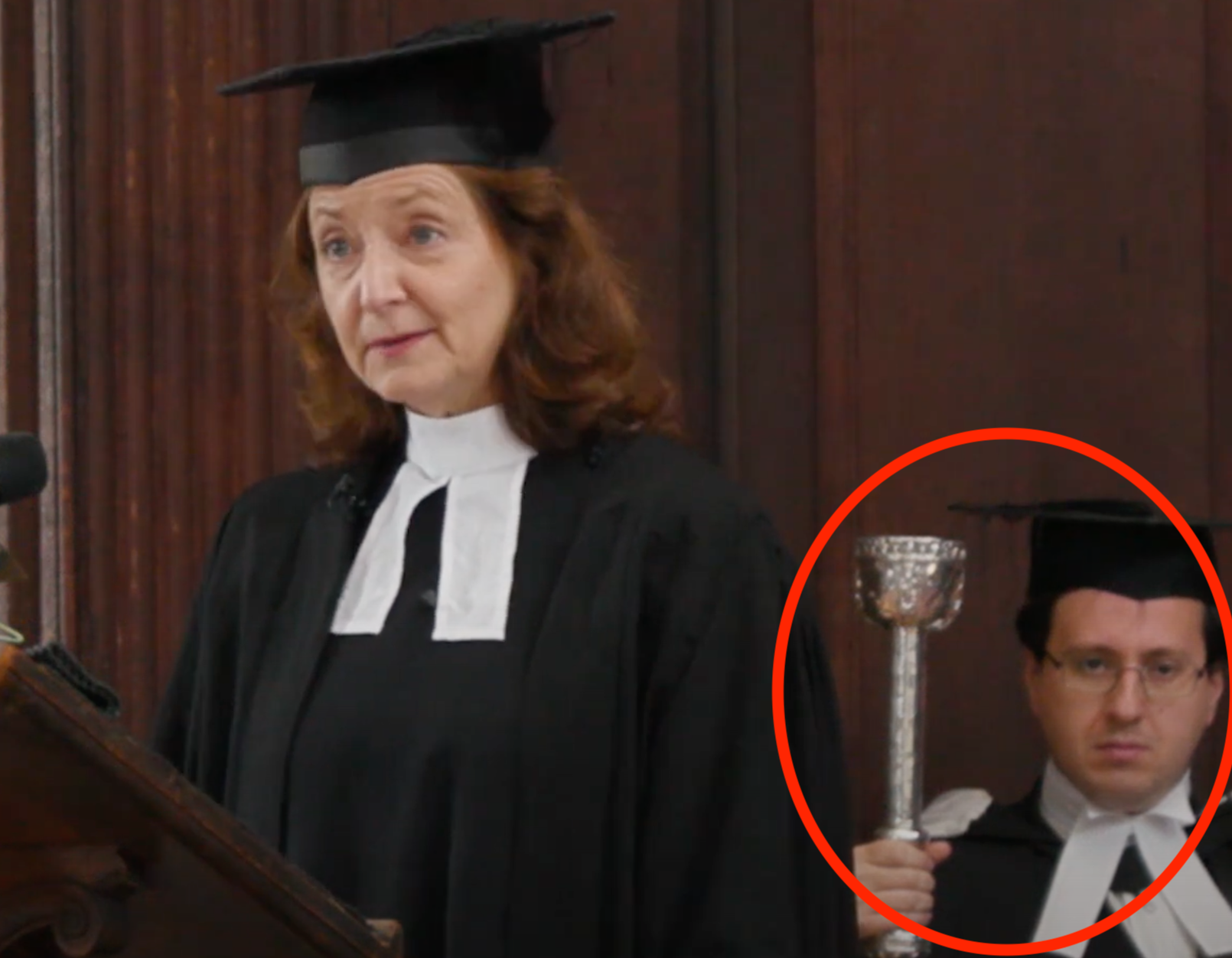
The audience was hybrid, so the Vice Chancellor had to address the people in the room while also making efforts to address the cameras for the virtual audience and the recordings. Despite the formality, and the hybrid setting, she used humour and managed to convey some very important messages about the past year and the future of the university.
This annual address is the only time in the year that the Vice Chancellor gets to give a speech to the entire university that is not reactive. It is the only opportunity to talk of aspirations and achievements in an open setting.
Formality can kill passion – for example, to many people it is hard to be passionate while wearing ceremonial gowns. A main point of a speech is that it is an opportunity to demonstrate and convey some sort of passion. It is no surprise that the most powerful speeches I’ve ever heard were in packed venues, stood up, surrounded by emotionally charged people reacting in one way or another to every point that the speaker passionately threw at them. Not at the fault of the speaker or speechwriter, this was very much not that. While they can be, epideictic speeches rarely are.
The same problem of formality afflicts many senior leaders with whom I work. I often get told things like, ‘I can’t say that in such a formal setting’. My response is usually, ‘You’re the boss, you can say whatever the fuck you like’. If they’re not the boss, I tell them they will be once they start breaking down the dreary linguistic status quo.
Don’t get me wrong, formality is fun in moderation, and it is sometimes important to respect the historical institutions in which we speak. But we must never forget to ask ourselves: Why are we gathered here? What is the actual point of this epideictic speech?
Every speaking opportunity, no matter how formal, is an opportunity. An opportunity to win the hearts and minds of the audience and create some sort of change for the better. Given that speeches have such power, it is always a shame when I see a good one wasted.

 Cambridge Speechwriter
Leave a comment