It is no secret that the world’s biggest tech companies are racing to secure their place in India’s AI future.
Across Bengaluru, Chennai, and Mumbai, new AI hubs are opening at pace. Global firms are funding education initiatives in Indian schools and universities, while senior executives are flying back and forth to engage with policymakers.
What is it that India has to offer that is attracting so much attention? Scale, talent, and stability.
With a population of 1.48 billion people and an average age of just 29, India possesses one of the world’s largest pools of young talent. By comparison, China’s population is slightly smaller and significantly older, with an average age of 37. As AI moves from research to large-scale deployment, access to a highly skilled workforce will become a critical competitive advantage.
This is one of the reasons why, over the past two years, so many of the speeches I have written for clients have focused on India: investing in India, collaborating with its growing AI ecosystem, competing with its emerging capabilities.
Last week, I attended the Cambridge India Business Dialogue 2026, hosted by the Judge Business School, and co-sponsored by Global Education Lab. A reoccurring theme throughout the event was the future of UK-India collaboration in technology and AI.
The case for closer cooperation was compelling.
As Lord Karan Bilimoria observed, it is remarkable that the world’s fifth and sixth largest economies are not among each other’s top ten trading partners. At a time when both countries, with a joint history, are seeking growth in the same sectors, that gap represents a significant opportunity.
The UK is already the third largest AI economy, behind only the United States and China. Meanwhile, India has the fastest growing AI patent growth rate. Indian students make up the UK’s largest cohort of international students, at 150,000.
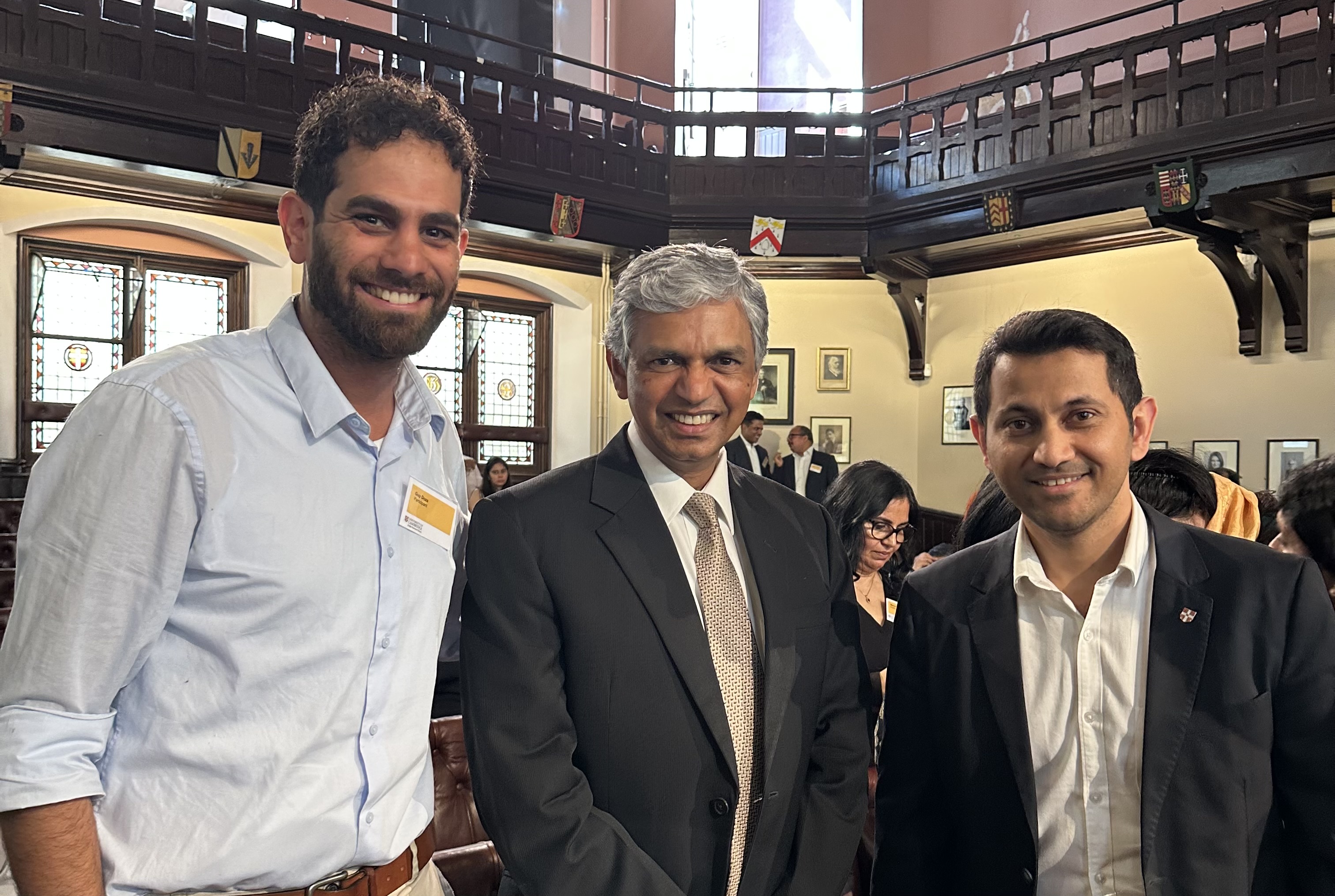
The keynote speaker for the conference was His Excellency the High Commissioner of India to the UK, Periasamy Kumaran. His presence, and his speech, highlighted an important message to the room: India’s position in the global order is increasingly distinctive.
Suhasini Haidar, Diplomatic Editor of The Hindu, said that India has the ‘à la carte option’ in the political world: India is engaged with multiple geopolitical blocs without fully aligning itself with any of them.
Combined with an independent judiciary, a credible central bank, and long-term political and democratic stability, this positions India as an emerging superpower with phenomenal hard and soft power.
India is fast becoming one of the most economically, politically, and technologically significant countries in the world. For businesses, investors, and policymakers, understanding India is no longer optional but an increasingly important strategic necessity.
The challenge is where to begin.
That is why the Global India Leadership Programme was created by Global Education Lab, in collaboration with the Judge Business School: an initiative for businesses and stakeholders to better understand India’s growth trajectory and identify practical opportunities for engagement, partnership, and investment.
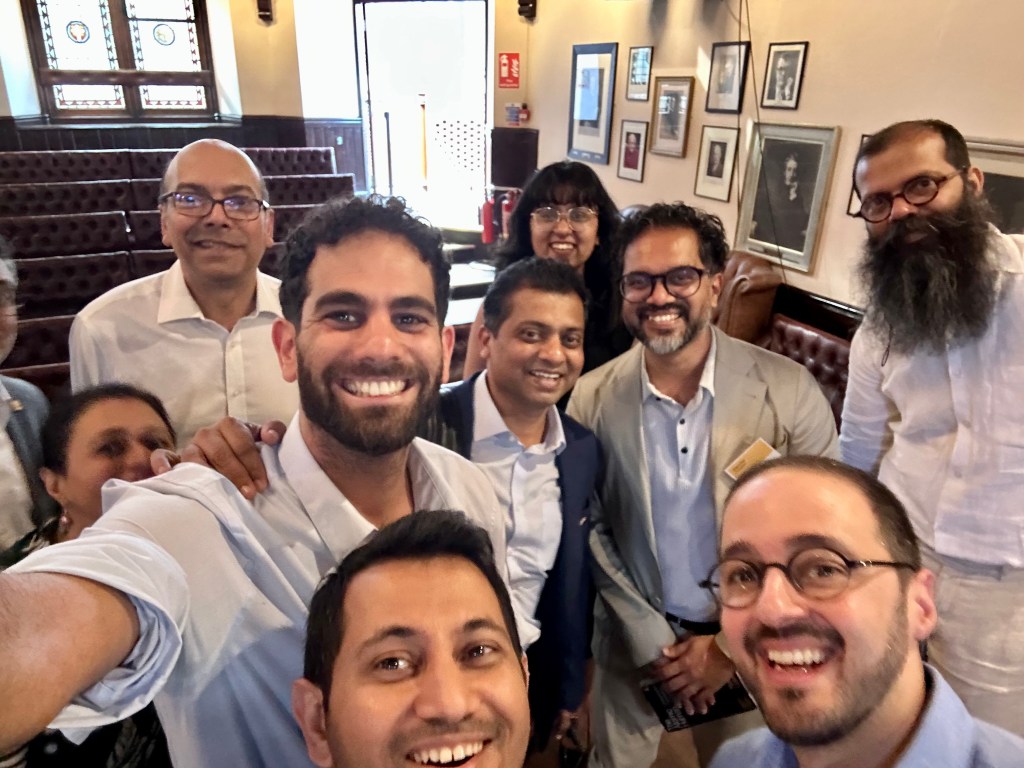
At the conference, I managed to get a selfie with some of the professors and alumni from the previous cohort a few months ago.
The next Global India Leadership Programme is taking place in September 2026. If you are interested in understanding how India’s rise may affect your organisation, and how you can position yourself to benefit from it, I encourage you to learn more. I’ll also be leading one of the workshops and would be delighted to see some familiar faces!


Leave a Reply